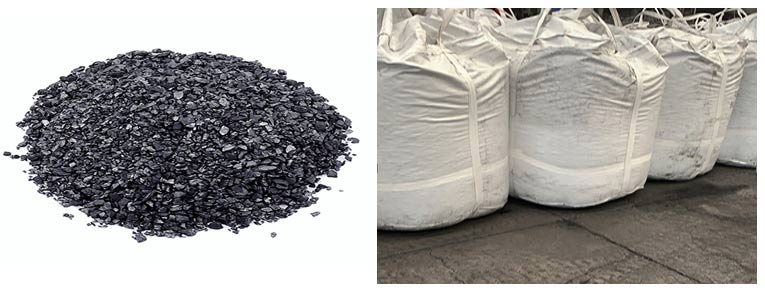
ECA is produced by heating raw anthracite to extremely high temperatures, typically between 1800°C and 2200°C, in an electric arc furnace.The process of electro-calcination is functionally similar to the traditional gas-fired method and produces a largely indistinguishable product. However, it operates as a continuous process, offering inherent efficiency advantages over conventional gas furnaces.
Due to its superior purity and low electrical resistivity, ECA is a high-quality carbonaceous material used in critical applications such as the production of carbon electrode paste (Söderberg paste) and other high-end carbon products. It is also widely used in foundries as a carbon raiser/recarburiser to enhance the carbon content of the melt.
Details of Electrically Calcined Anthracite (ECA) Production
Plant/Facility
Ultimate Capacity
Electrically
Calcined
Anthracite
48,000 TPA
Typical Specification of ECA
Property
Specification (%)
Fixed Carbon
94 (min)
Ash
5 (max)
Volatile Matter
1 (max)
Moisture
0.1 (max)
Sulphur
0.2 (max)
ECA and packaging
ECA will be available in granules of size 1 mm to 15 mm as per customer requirements in packaging of 25 kgs/ 50kgs and 1 MT jumbo bags.